

By Alan B. Cohen
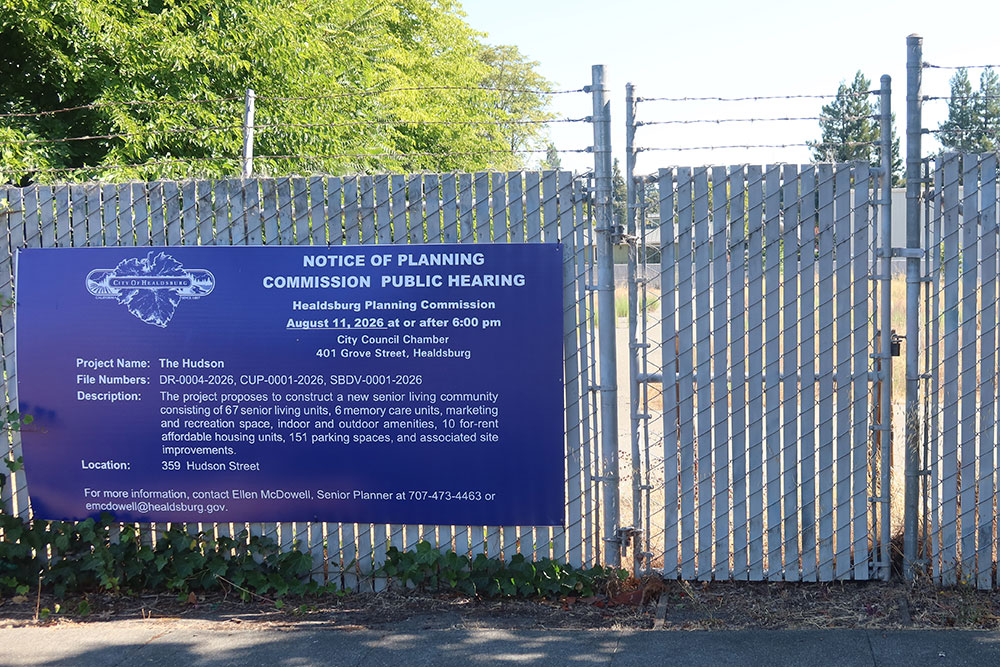
There has recently been a lot of coverage and conversation about ‘The Hudson’ senior housing project at the former site of Healdsburg Lumber. At the Planning Commission hearing Eric Ziedrich, the property owner, talked about his unsuccessful efforts to bring workforce housing to the site prior to getting an offer from the Gallaher Companies to purchase the property. I would like to elaborate on his comments.
When Eric approached me to assist in exploring how he could create workforce housing on the site, I recruited local architect Jon Worden, who has extensive experience designing multi-family housing, to collaborate. We collectively developed what I believe would have been a unique and successful concept.
The plan was modeled on what organically occurs across the country and is common in college towns. Young people get together and share the rent on a single-family home. They each get a bedroom and share the common area. We came up with a plan for a six-bedroom house with a common kitchen, living and dining. A “house manager” would reside in one of the bedrooms in each building. We were able to fit five of the structures on the single-family zoned portion of the site. This would have provided “affordable by design” housing for 30 individuals—or more with couples—a great fit for the hospitality workforce we have here in Healdsburg.
On the Mixed Use zoned portion of the site the existing structures were to be remodeled and repurposed to various commercial uses including a food hall, a wine museum and a working winery or brewery, with a row of live/ work units added.
This would have been an exciting project with the young residents activating the commercial uses, and would have been a wonderful gateway to the SMART station with easy biking and walking distance to jobs downtown.
Why didn’t it happen? Healdsburg’s Growth Management Ordinance (GMO), with the permit uncertainty it creates, proved too risky for lenders to finance. Even if financing could be found it would have been extremely risky to undertake. So, what do we get with our GMO? Large luxury residential projects big enough to enter a development agreement with the city to guarantee GMO allocations or projects exempt from the GMO such as hotels and, in this case, a luxury independent and assisted living project.
What I find ironic is that many of the people who spoke at the Planning Commission hearing protesting the nature of the project are the same people who have vigorously opposed efforts to modify the GMO. So, one more promising housing project couldn’t get off the ground due to the GMO. The GMO that resulted from unfounded fears of sprawl after Parkland Farms was developed; but that’s a debate for another time.
I would warn the community that the next General Plan Housing Element cycle will likely be accompanied by more State housing laws that further remove discretion from local jurisdictions and could well target communities that impede housing with growth management ordinances.
Alan B. Cohen is an architect and former Healdsburg Planning Commissioner.






I agree 100% that the Healdsburg GMO needs to change, but Measure O was not the answer. Yes, 30 units of housing per year is not enough new housing, but Measure O would have excluded single-family homes from any additional new development with no annual cap number for multi-dwelling units. Can you picture the 80 acres south of the bridge with only apartments and condos? Or how about the city plans for 852 apartments downtown with only one parking space per unit?
It’s been two years since Measure O and there is no GMO modification on the upcoming ballot. Rather than spend hundreds of thousands of dollars for a GMO plan no one wants, why can’t we just change the GMO annual limit to an acceptable higher number?
Doing nothing is not the answer, but don’t blame the Hudson Street project on the vast majority of voters who said No to the very flawed Measure O.
Finally, as to the idea of building five communes where the Hudson project is slated, this is not Berkeley. We need more families and should adjust our GMO accordingly.
Alan Cohen misses the mark in blaming the failure of Measure O on “the same people” who protested his effort to develop six-bedroom housing at the former site of Healdsburg Lumber. Measure O failed because the City Council ignored its own poll showing that Measure O would lose pivotal electoral support if the City Council were to overreach by crafting the measure to exempt any portion of the city’s downtown core from the GMO–which is precisely what happened. The City Council’s overreach is what killed Measure O.