

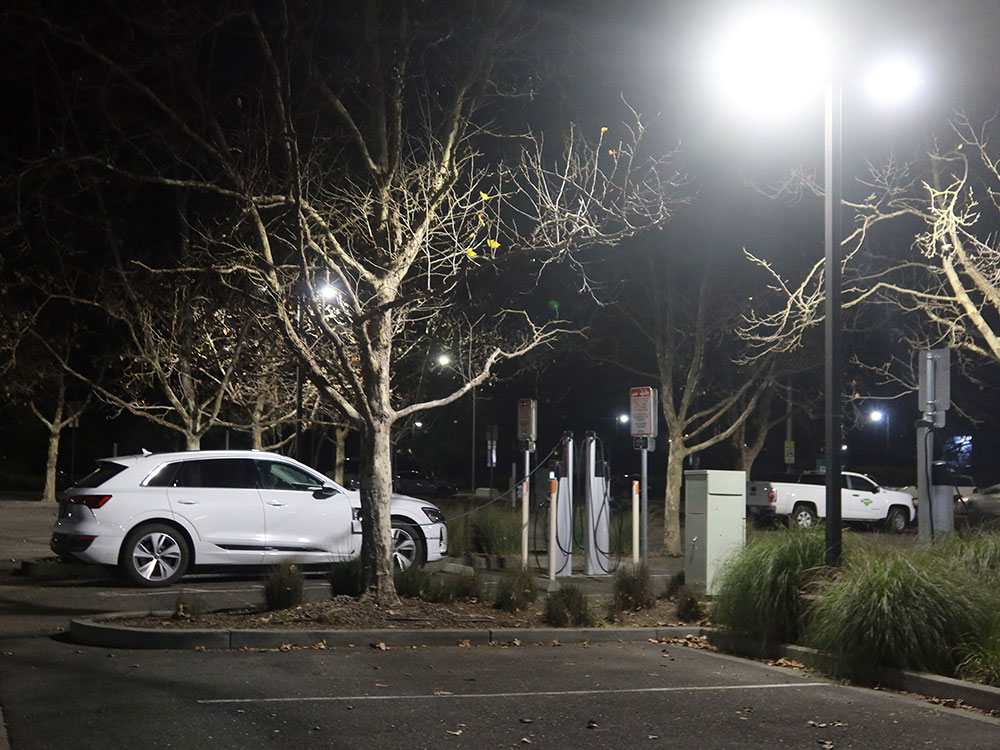
The City of Healdsburg is taking the lead on expanding its electric vehicle and clean transportation programs by leveraging available state Low Carbon Fuel Standard (LCFS) funding, while sharpening the city’s focus on equity and climate goals. At its Feb. 2 meeting, the City Council approved updates to existing transportation electrification programs, to be implemented by Earth Day 2026 (April 22).
“LCF is one of our strictest energy program funding sources: It can only be to support transportation electrification, and predominantly for the primary benefit of low-income individuals and communities,” said Terra Sampson, Healdsburg’s utility conservation analyst.
Sampson pointed out that in the program’s equity requirement section, the “governing body” could provide a definition of low income that could provide “more local flexibility and opportunity to benefit low-income residents,” she said. “Adopting a local low-income definition is part of tonight’s resolution.”
The local definition expanded the definition of a low-income resident to include anyone currently receiving the Healdsburg CARE Electric Bill Discount, or anyone residing in a household that meets the qualifications.
CARE is the City Alternative Rates for Energy program. Applications and information for this and other rebates are available in English and Spanish on the city’s website at SmartLivingHealdsburg.org.
“A local definition will capture more Healdsburg residents than the State default definition, allowing the City to use LCFS funds to benefit low-income residents in Healdsburg,” read Sampson’s report.
Assets and rewards
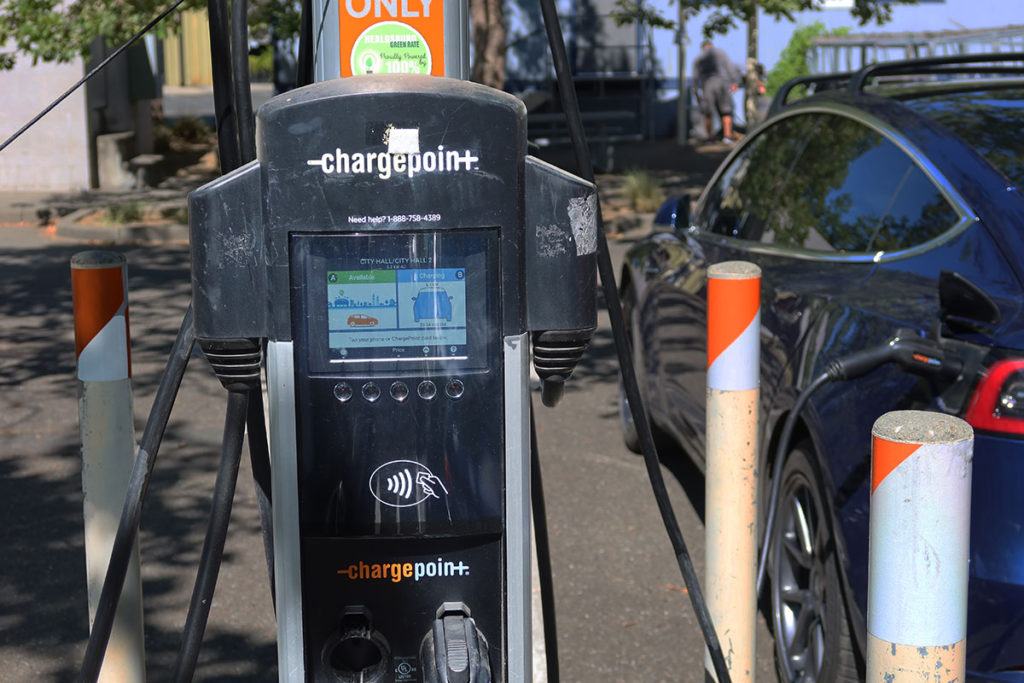
Under the state program, Healdsburg generates about 1,700 credits from EV charging each year, roughly $100,000 annually. These credits can be sold to fund transportation electrification. An additional $300,000 in unsold credits are available—unused assets in the city’s accounting.
The city is also eligible for a one-time transfer of approximately $883,000 from the California Clean Fuel Rewards program, creating a significant pool of funding for new and expanded initiatives. “These are one-time funds which I don’t expect to become available again,” Sampson said.
The availability of these funds and credits were presented as an opportunity for the city to expand services and users, offering up to 50% credit on charges procured at a city EV site, increased rebates for some home or business EV chargers, continued support and increase of e-Bike rebates, and other benefits. Promotions such as free introductory offers and referral benefits were also proposed.
Sampson also floated the idea of an EV purchase rebate, not currently available at the city level, which would increase the user base of the programs. No EV rebate is currently available either on new or used EV vehicles, only new.
The purpose of the CARE program and rebates encouraging EV usage is to reduce the overall greenhouse gas emissions produced by the city, in accordance with state and regional goals. CARE participants also get discounts on utilities, including water and electrical rates and sewage fees.
New chargers
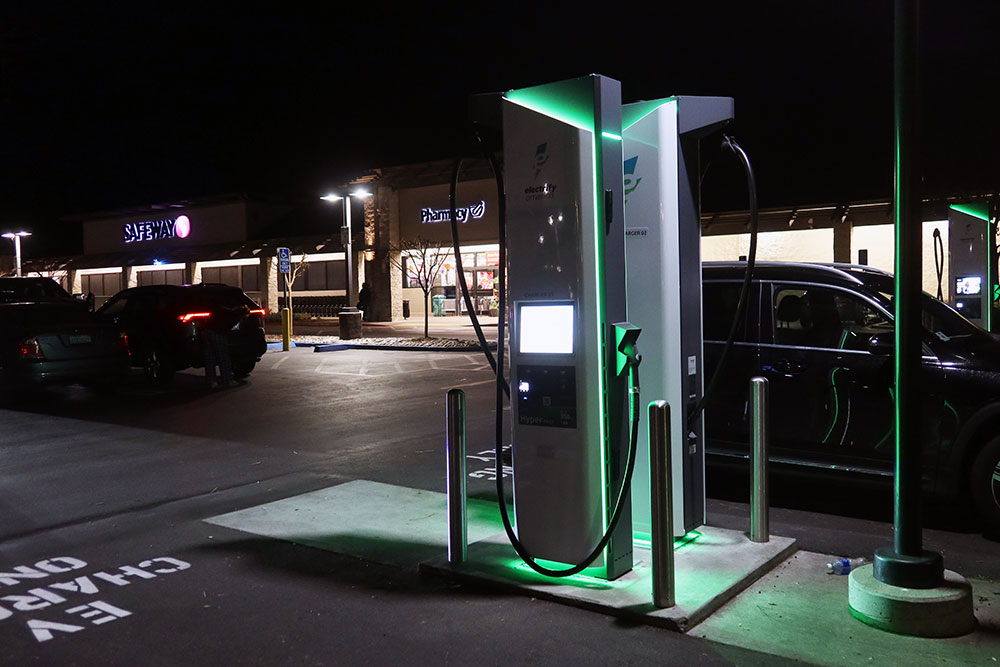
at Safeway is not part of the city’s CARE rate program.
The council also discussed how to use $883,300 in one-time funds received from the State to support transportation electrification. The council expressed interest in adding new public charging stations in the community. These would be located in areas where a significant number of low-income households exist, locations defined under the new low-income residents definition being adopted.
Two such locations were offered in the meeting, Giorgi Park on University at Grant, and the Abel de Luna Community Center, but more, such as the low-income Randall apartments at Mill District, might be determined in the future.
The EV charging rebates apply only at the city-owned charging stations, not private or commercial recharging systems like the Electrify America installation at the Safeway on Vine Street. Those locations however may have Level 3 “fast-chargers”; the city-owned sites only have Level 2 chargers.






EV vehicles are expensive. The poor and middle class can’t afford them. The car companies are losing a fortune building EV cars. These charging stations for EV cars that don’t exist is just plain stupid.