They say rain is coming. Fortunately, we’ve had enough rain to suppress fire season as we roll out of Halloween, into elections and Thanksgiving. Hmmm … Thanksgiving after the elections will probably work out for some and not for others.
Be that as it may, we’re hoping for rain through the coming months to refill reservoirs throughout the West. And if we are to be picky, we’re hoping that rain comes gently to minimize flooding through low-lying areas of the county and elsewhere.
They say—and in this case “they” is the NOAA (National Oceanographic and Atmospheric Administration)—that El Niño effects will be particularly strong. El Niño shifts the Pacific jet stream south, meaning less Seattle rain, more California rain and possibly more snowpack in the Sierras, depending on temperatures.
FUN FACTS: El Niño was coined by Peruvian fishermen noticing warmer weather trends around Christmas. The term entered meteorological use in the early 1900s. Other results of El Niño include fewer hurricanes in the Atlantic—this year down 85% from average—and drought in Australia and Indonesia.
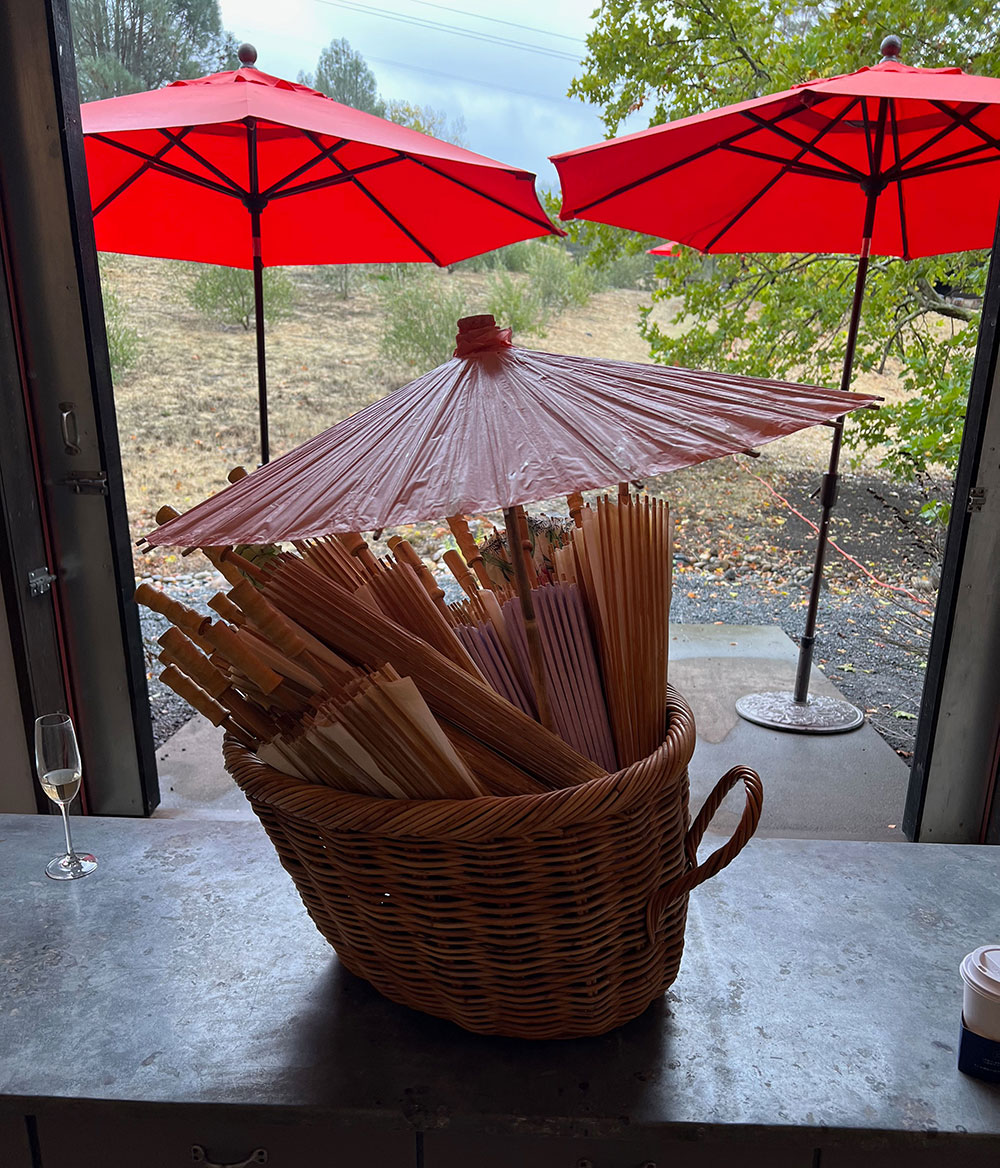
The term “umbrella” dates from the 17th century, “umbra” meaning shadow. The first European folding umbrella was likely made in Paris in 1710; it quickly became fashionable. The term “bumbershoot” is, surprisingly, an Americanism, sometimes wrongly thought of as a term from that other English language. Bumbershoot, a mashup of umbrella and parachute, was first coined in Chester, Pennsylvania, in 1876.
“Gamp” is a British term for umbrella, derived from Dickens’ character, Sarah Gamp, who had an especially unwieldy one. “Brolly” is British slang for umbrella. “Parasol,” “parapluie” and “paraneige” are French terms for umbrellas, unless one wishes to say “en-tout-cas,” which means “in any case,” to cover all the bases. Bumbershoot is also the name of Seattle’s outdoor music festival—I wonder why.
Singing in the Rain, with Gene Kelly, Donald O’Connor and Debbie Reynolds, is pure cinematic joy—a worthy choice for a postelection uplift. Behind the sets, things were a little different. Gene Kelly reportedly danced the title number with a 103-degree fever in a soaking wet wool suit; and Debbie Reynolds, 19 years old, was carried off-stage after “Good Morning,” her feet swollen and bleeding. Released April 11, 1952, and made for $2.5 million, it grossed $7.5 million and left us a classic go-to every time rainfall can’t dampen good spirits … or romance.