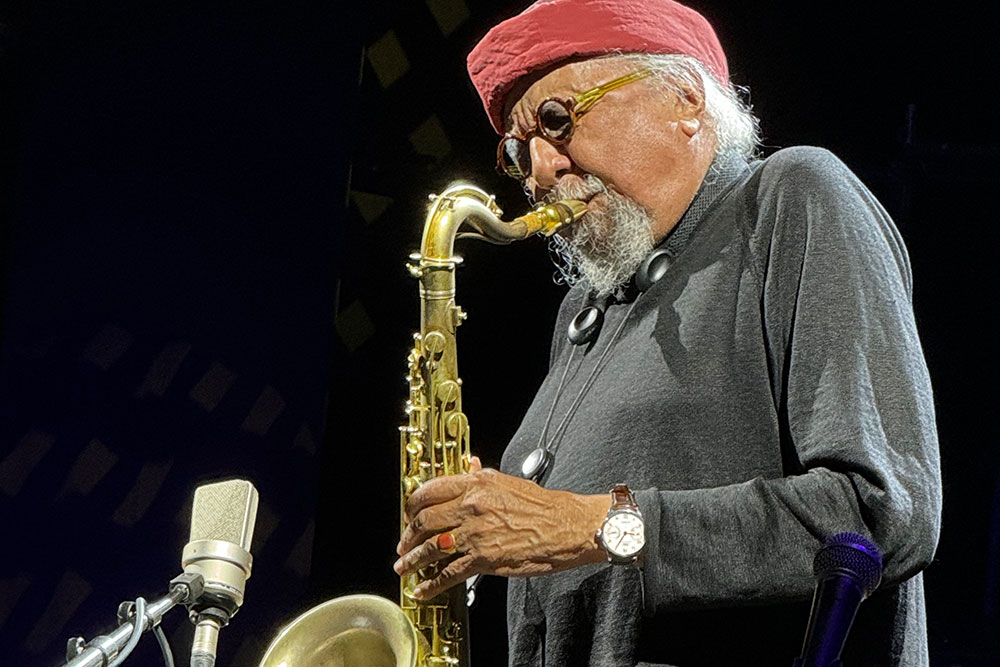
With the passing of Sonny Rollins on May 25, jazz lost one of its primary voices, which means the loss is to American music. The “Saxophone Colossus” was dominant in the music in the 1950s (the nickname comes from a 1956 album) right through to the end of the century. Though he was 95 when he died, his influence will surely be heard next week when the Healdsburg Jazz Festival brings a number of saxophonists to town—not least Charles Lloyd.
Lloyd will headline the Sunday, June 14, show at Bacchus Landing, marking his 10th time playing for a Healdsburg audience. In fact, festival founder Jessica Felix reminds us that his first visit was in 1997 with drummer Billy Higgins—two years before the first Healdsburg Jazz Festival. Other appearances have included three performances with the late Zakir Hussain, a couple with pianist Jason Moran and, most recently, in a livestream broadcast from the Paul Mahder Gallery during the pandemic with guitarist Julian Lage and Hussain.
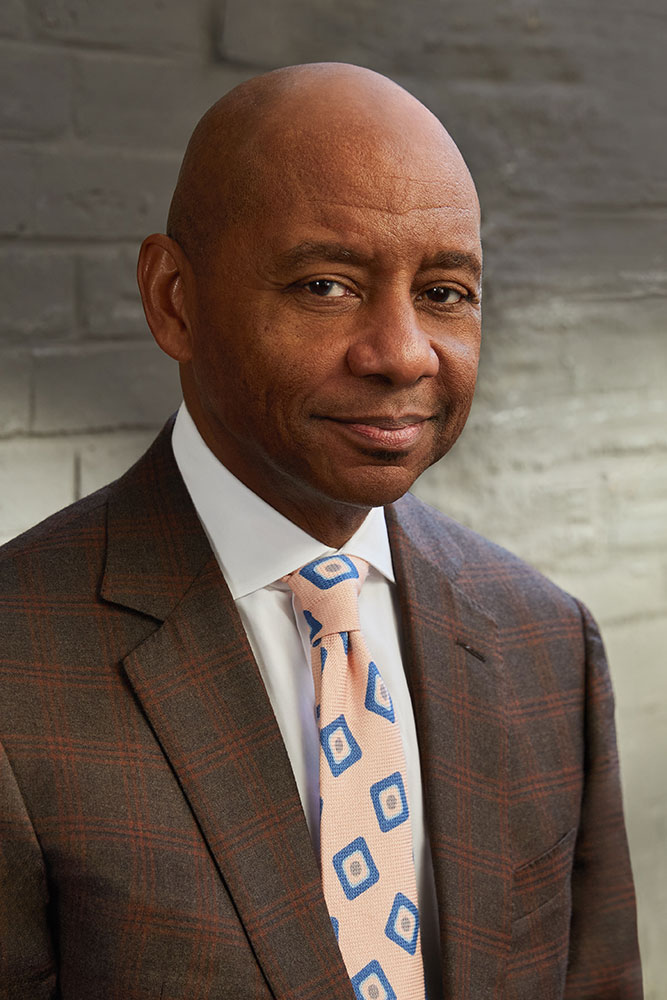
“He’s probably our greatest living saxophone player that we have now,” said Marcus Shelby, the festival’s artistic director. But the 88-year-old Lloyd, who left Memphis for L.A. in 1954, is far from the only saxophonist playing during the 10 days of this year’s festival.
Here’s another one: Branford Marsalis headlines the Friday, June 19, show—again at Bacchus Landing. “That’s a very personal special booking for me because I first saw Branford in 1989,” Shelby said. Another member of the talented New Orleans clan, a family that had a big impact on Shelby’s own career, Branford has always been somewhat overshadowed by his one-year-younger brother Wynton, perhaps unfairly. (Let us not overlook Jason or Delfeayo Marsalis, either.)
Saved from Engineering
“I was at Cal Poly in San Luis Obispo, finishing an electrical engineering degree,” recalled Shelby, when he saw both Marsalis brothers, separately, within a year. “I’m like, ‘Oh my goodness, I do not want to do electrical engineering.’”
Instead, following a show by the Branford Marsalis Quartet, young Marcus Shelby made a move. “I snuck on their tour bus … [t]hey were just chilling. And, I thought I just fell into heaven or something.”
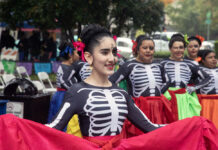
Jazz lovers can get a taste of heaven when Branford Marsalis performs June 19. While the date is officially Juneteenth, the Festival throws its own annual Juneteenth Celebration a week early, on Saturday, June 13. Once again (though possibly for the last time) it will be held on the Healdsburg Plaza, from 2-8pm.
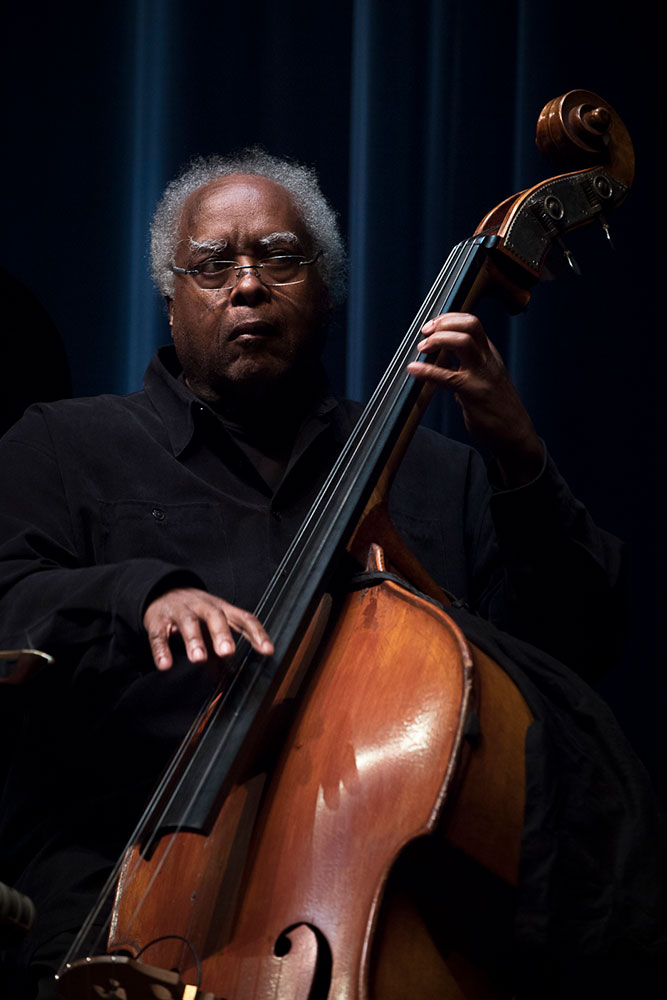
The late bass legend Ray Drummond, a frequent Festival performer, will be honored by a family of first-call musicians, many known to local festival fans: pianist George Cables, drummer Billy Hart, bassist Rufus Reid and of course a saxophonist, Bobby Watson. All are headliners in their own right, and their set will be a memorable tribute to a classic era of jazz.
Many other events are scheduled during the 10 days of this year’s festival, from the Orrin Evans Trio with vocalist Ms. Lisa Fischer at the Raven on Friday, June 12, to a Miles Davis Centennial Concert on Sunday, June 21, at the Paul Mahder Gallery, with at least one show at every available stage in town.
Saxophones
Still, the question remains: Why the saxophone? From the 1930s on, the instrument became almost as important to the genre as the trumpet, if not more so.
“There’s a long history,” said Shelby who, like Wynton Marsalis, is a natural teacher. “It goes way back to Chu Berry and some of the great saxophones, Coleman Hawkins and Lester Young. I think what it is, the tenor saxophone is probably the closest thing to the human voice. The sort of natural human voice.”
Indeed, the common types of the instruments are in the human range; generally in choral music, the tenor is the male singer, the soprano the female. Other saxophones are the soprano and the bass, again echoing the musical range of singers.
And because they are a combination of wood and metal, reed and brass, they allow the breath to become evocative if not emotional. Just like a voice.
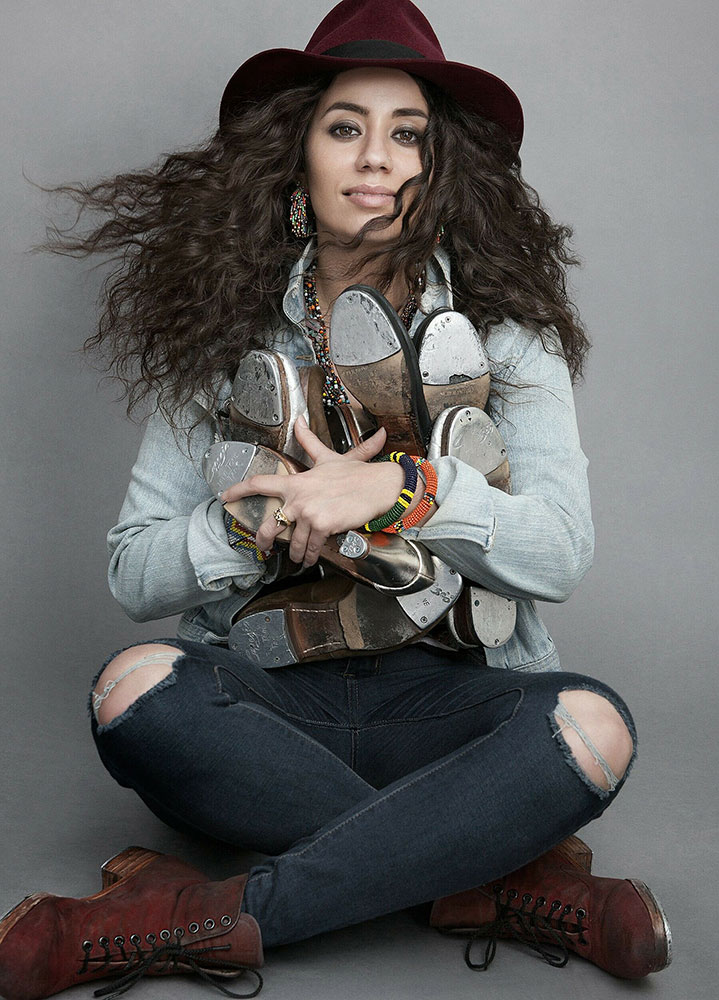
The saxophone is not always the primary instrument on stage: vocalists like Nicholas Bearde (a baritone) and vocalist, composer and bandleader Cécile McLorin Salvant (who heads the finale at Bacchus Landing on June 21 at 7:30pm) take center stage. And one of the “late-night” shows at the Elephant in the Room (June 18, 9:30pm) features tap-dancer Michela Marino Lerman, who will perform “Tapping into Coltrane.”
“You know, tap dance has always been part of the history of this music,” said Shelby, for whom all aspects of jazz are worth exploring. Lerman is this year’s Rising Star Artist for the festival, an honor always worth keeping an eye on. She will sit down with Shelby for an Artist Talk at St. Paul’s on June 16 at 2:30pm. It is free, as are many of the events and performances at the Healdsburg Jazz Festival.
Tickets and additional information at healdsburgjazz.org.