The theatrical release and box office explosion of the new A24 psychological horror film, Backrooms, represent a landmark moment in modern cinema. It serves as the intersection of three major contemporary cinematic trends: the box office dominance of horror, the mainstream acceptance of a new YouTube-to-cinema pipeline and a successful push to get Gen Z into movie theaters instead of streaming from home.
The smash success of Backrooms and last month’s Obsession has me seeing a future for movie theaters that, just a year ago, felt impossible.
With chain cinemas closing all over the country, it recently felt like the communal theater-going experience was on its way to extinction. But if small movies like these can not only get the under-30 crowd back into seats but also end up dethroning Star Wars at the box office, we’re entering unprecedented times for small-to-mid-budget films.
Directed by Kane Parsons—just 17 when his initial short film went viral on YouTube—Backrooms signals a massive shift in how Hollywood discovers talent and concepts. As major studios increasingly look to digital spaces for fresh intellectual property, this film stands not just as a bastion for the future of cinema, but as a testament to the creepiness of “liminal space” horror and the inherent power of “mindf**k” cinema that challenges our perception of reality.
To understand why a studio like A24 scrambled to greenlight a feature-length film based on a series of YouTube videos directed by a Petaluma teenager, one has to look at the current state of the film industry, where horror movies are experiencing a massive, sustained golden age. While traditional blockbusters struggle to draw audiences away from streaming services, horror has proven to be uniquely bulletproof. It’s a genre designed for the communal, theatrical experience. Audiences want to scream together in a dark room.
Horror also consistently delivers astronomical returns on investment. Look at The Blair Witch Project. It made $250 million on a $200,000 budget. That’s a return studios will never stop chasing.
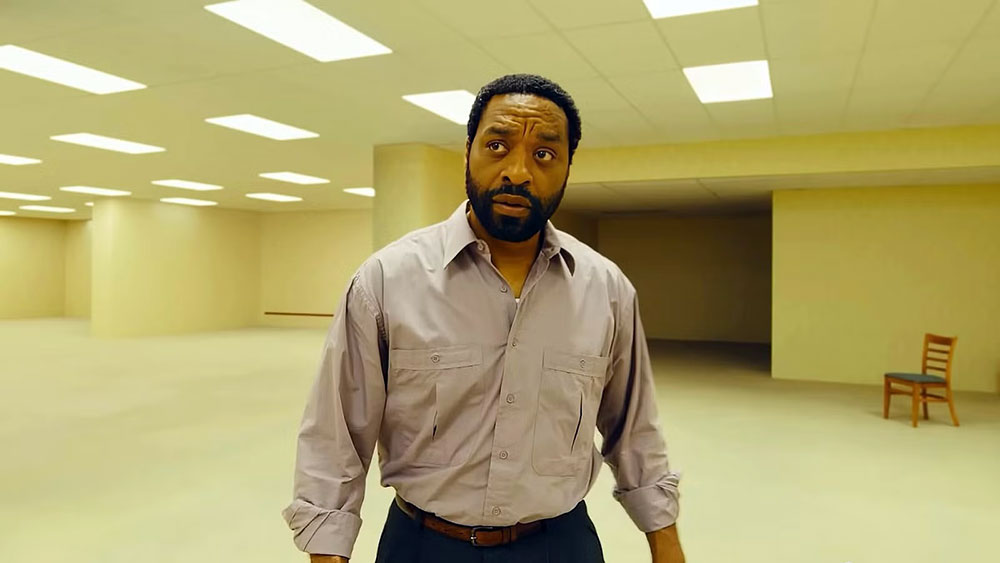
What Parsons has done brilliantly with his theatrical debut is not just gracefully expanding on that initial concept of someone accidentally “noclipping” out of reality and into an infinite, randomly segmented maze of empty rooms. The film is anchored with two absolutely remarkable actors: Chiwetel Ejiofor and Renate Reinsve. Ejiofor plays a depressed and struggling furniture store owner who discovers the backrooms in his basement, while Reinsve plays his skeptical therapist, who worries for his mental health.
With two actors of such extraordinary caliber grounding the film, even the long, silent stretches of the characters walking through the distorted, impossible, yellow rooms become fraught with tension. Both effortlessly convey this dread using just their eyes. It’s a masterclass in physical performance that I’m shocked such a young filmmaker was able to cultivate.
The concept of Backrooms taps perfectly into the phenomenon of “liminal spaces”—places like schools, malls or offices that are usually bustling with people, but become deeply eerie and unnatural when completely vacant. Note: Please don’t let this become the fate of all movie theaters.
The film contains many moments where absolutely nothing scary is in frame, yet the alien strangeness of the environment is profoundly unsettling and induces a deeply primal dread. One character describes the backrooms as incomplete and incorrect memories taken from the minds of those who have become lost in the endless hallways. That scares the absolute hell out of me.
But Backrooms contains no jump scares or typical horror tropes. Instead, I would lovingly place the film within the genre of “Mindf**k” movies—psychological and surrealist films that actively attempt to distort reality, break logic and leave audiences questioning the world around them as they drive home. Mindf**k cinema transforms the act of watching a movie from a passive experience into an active, intellectual puzzle that, as with the best of movies, actively rewires the viewer’s brain.
Films like Christopher Nolan’s Memento and Inception, Charlie Kaufman’s Synecdoche, New York or basically anything from David Lynch refuse to hand the audience easy answers. Instead, they force viewers to decipher shifting timelines, unreliable narrators and dream-logic. It’s fun. I swear.
Backrooms embodies this genre perfectly by weaponizing spatial and psychological disorientation. The horror doesn’t come from monsters jumping out of corners, but from the existential dread of infinity, the breakdown of linear time and the terrifying realization that the architecture around you makes absolutely no sense. It forces the human brain to confront a space that looks at once deeply familiar yet fundamentally wrong.
While the film makes a few minor rookie mistakes with its script—making too many things literal that could have been understood on a purely instinctual level—it’s an astonishingly assured and tonally immaculate first feature by such a young filmmaker.
Backrooms might not convert anyone who inherently dislikes being spooked at the movies, but it’s worth watching for the anti-horror crowd simply to see how atypical the genre can be when approached by someone with a singular vision. It’s filmmaking like this that saves the theatrical experience just as much as Top Gun or Ryan Gosling. Let’s see where this goes.
‘Backrooms’ is currently playing at True West Film Center and on other local screens.