

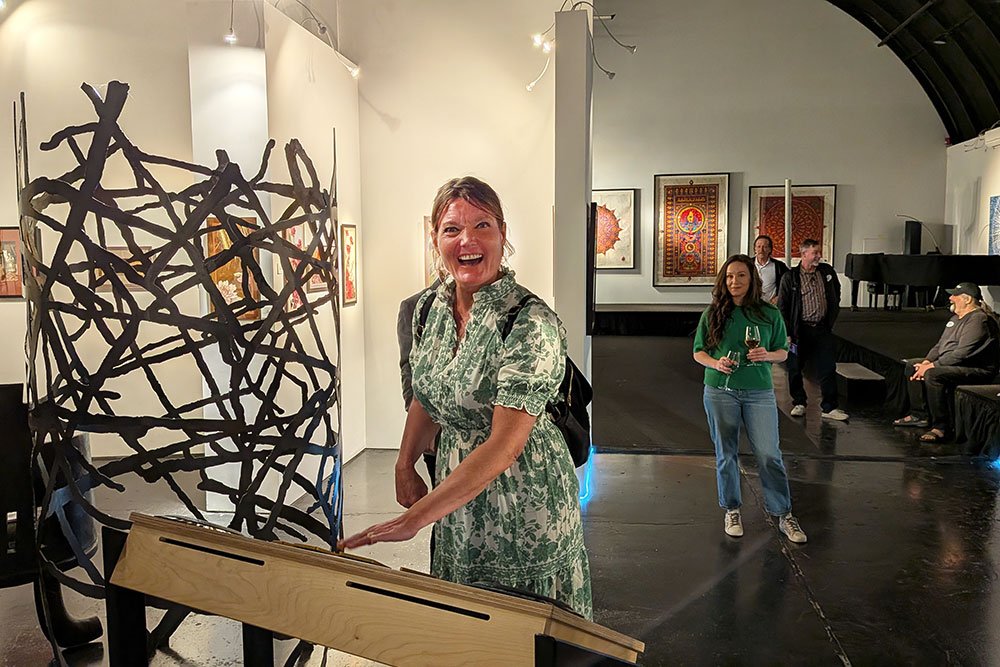
One of the key innovators in the digital media revolution, which has erased the market for physical LPs, CDs and DVDs, appeared in Healdsburg last week to showcase what he’s working on now: an AI-driven music-making “installation” that will display at Paul Mahder Gallery through the end of the month. It may also appear at the new Magical Bridge playground when it is installed at Badger Park.
Dr. Nolan Gasser, a pianist and composer with a Ph.D. in musicology from Stanford, has put his stamp on the music revolution as the architect of the Music Genome Project, the basis for the music streaming service Pandora. “I designed the way that music of all genres is analyzed, by trained musicians, whereby that music data is entered into the database and becomes the primary basis for the creation of the service’s personalized radio stations and playlists,” he said.
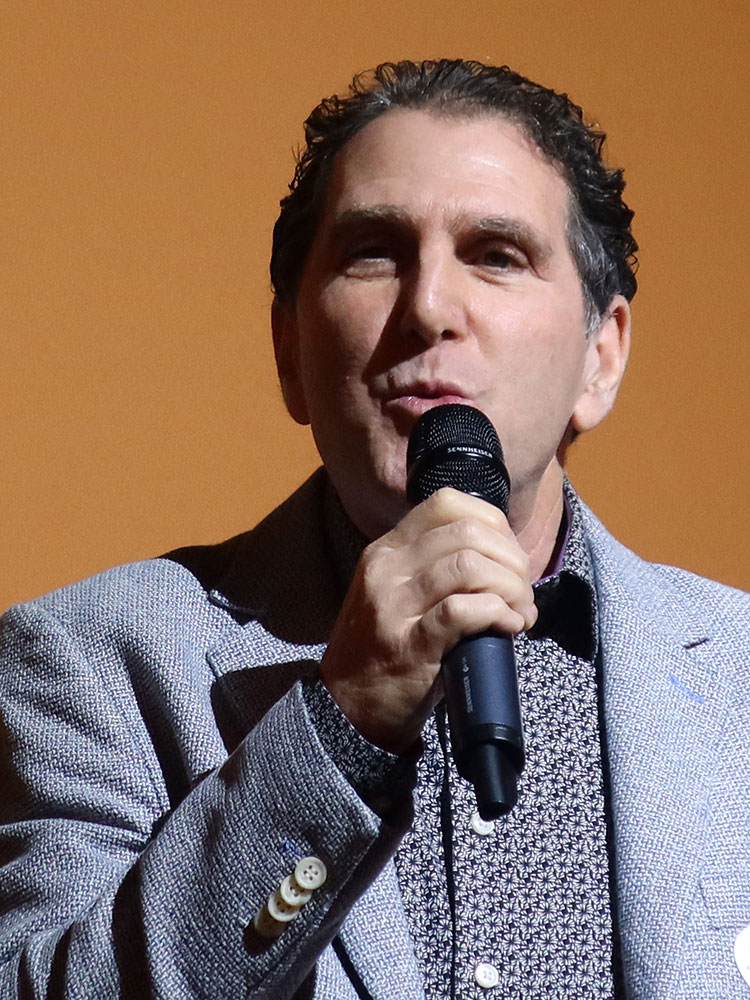
Though Pandora’s commercial influence has waned as Spotify, Amazon Music and other services have grown (it is currently owned by Sirius XM), Gasser hasn’t completely left the influential startup behind—he is now chief musicologist emeritus at Pandora. He’s also branched off into creating music technology as an art form; his newest endeavor is called the Musical Bridge.
The similarity in purpose caught the attention of Olenka Villarreal, whose Magical Bridge Foundation is currently raising funds for an all-inclusive playground at Badger Park. A common donor links the two as well: the late Vince Steckler, who died in a car accident in 2021. An early backer of the Magical Bridge playgrounds, and a music enthusiast, Steckler was also a Bob Dylan enthusiast. So the basic architecture of “Like a Rolling Stone” is baked into one of the musical modes that the device plays, or rather plays with.
Clarified Villarreal, “The reality is, the name Musical Bridge was proposed by Nolan after we engaged him to help create an inclusive music experience for our upcoming playground project in Singapore. Funding came from our long time board member Vince Steckler, but Magical Bridge commissioned it.”
Last Friday evening a score or more of Healdsburg’s residents came to the Gallery at 222 Healdsburg Ave. They heard from the 222’s director Erin Partridge, Magical Bridge founder and CEO Olenka Villarreal, then the affable Gasser himself who described the transition from physical copies to digital copies as “disruptive distribution.”
“This revolution is different—it is a disruption of creativity. So now you can actually create a poem, or an image created or a video created or a piece of music created by artificial intelligence, just by a prompt,” he said.
How it works
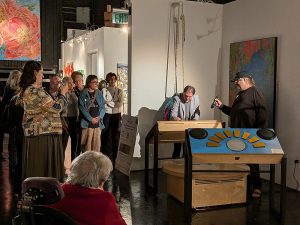
The Musical Bridge prototype currently installed at the Mahder Gallery has a simple interface but complex circuitry. To all appearances, the harmony station is a soundboard with two round, black speakers and an array of eight metallic gold bars spread above a large silver dish button.
Hit the big button, the AI pad, and one hears instruments (all artificially generated, of course) performing a variation on one of several basic compositions. Hit one of the keys, and a note sounds that is compliant with the key or mode of the AI composition being performed. Hit another key, and it too is in the same mode, but it might take the performance in a slightly different direction.
The underlying compositions range from major and minor scales to a blues scale, an Arabian scale or pentatonic scales. The instruments are familiar, recognizable—marimba, celeste, harp, vibraphone, flute, table, handclaps (and a harmonica for the Bob Dylan number). All are computer generated.
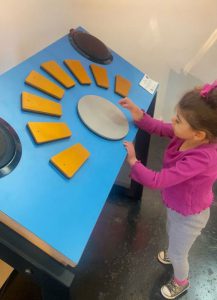
The process is similar to the large musical chimes installed in many playgrounds to give kids a chance to experiment with music. But the music produced in this AI platform is a swirling hall of sounds in the theater of the imagination.
AI is everywhere
Not unlike Gasser predicted, being engaged with the Musical Bridge does get to the creative impulses, and spirit. Which makes one ask, if AI is as creative as humans, what is “creativity”?
Gasser himself took it in the practical direction, admitting that AI could be good and bad. “It’s potentially both,” he said, wielding the hand mic with the authority of a trained TEDx speaker. “But I think it’s incumbent on all of us to use it positively, since it’s everywhere—we are all using AI.”
The Musical Bridge is to some degree an attempt to do that, he continued, “to make it so that it’s not just a passive exercise, but it’s an interactive one, where AI is helping to facilitate the musical experience.”
The first installation of the Musical Bridge took place in Palo Alto last summer, where it was presented as the Magical Bridge Foundation’s latest project in promoting inclusion. The device on interactive display at the Paul Mahder Gallery is a prototype, a Phase 3 development. Phase 4 will occur when production begins and the Musical Bridge is installed widely—in arcades, corporate lobbies, schools and playgrounds.
Once Gasser demonstrated the sort of melodies and structures he had devised for the Musical Bridge, the audience dispersed to the two panels midway down the gallery, toward the wine bar.
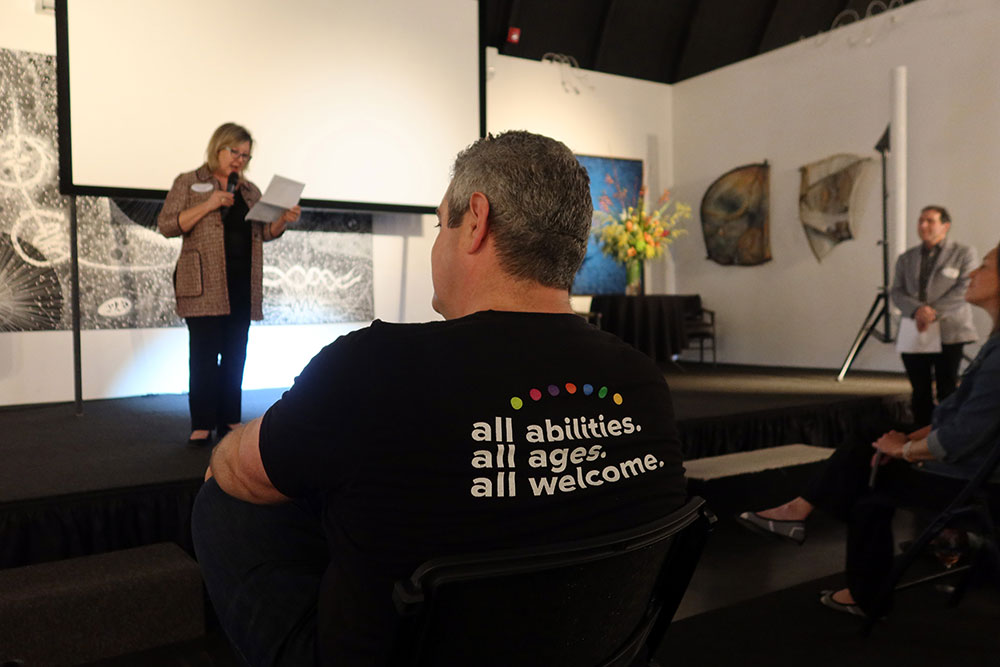
Everyone from councilmember Ariel Kelley to all of the “ambassadors” for Magical Bridge Healdsburg took a turn at the two modules. Emily Peterson encouraged young Aisley to play, as did Emily herself, and ambassadors from Jasmin Thyme Floral, Heartizens and many others. That evening, everyone in attendance was sonically seduced into being an ambassador for the Magical Bridge.
“Music is how most cultures come together. This is a way for everyone to connect,” Villarreal said. That is close to the Magical Bridge Foundation’s own goal, and mission: Creating a place to play that is accessible for everyone, to bring everyone together.
The Magical Bridge Foundation is still seeking support for its inclusive Badger Park project, at magicalbridge.org/healdsburg.





This park will destroy the lovely peace and tranquility of BLisaadger Park. Terrible idea.
We thank Christian Kallen for joining us last Friday and for this terrific coverage! It has been wonderful to hear from so many Healdsburg families excited about having Badger Park transformed into a place for those of all ages and abilities to play in and connect with the community. The remark made by “Lisa” here is curious as there remains plenty of open space all around Badger Park (and beyond). However, for the many that benefit from movement, tactile and sensory play, and swinging and spinning, there is nothing like multigenerational play days at Magical Bridge! Thank you Healdsburg friends, for your ongoing kindness and magical welcome. We can’t wait to start our community outreach with you in the Spring.
Olenka Villarreal
Founder and CEO, Magical Bridge
ol****@***********ge.org
We welcome the Magical Bridge with open arms. Let joy rule.