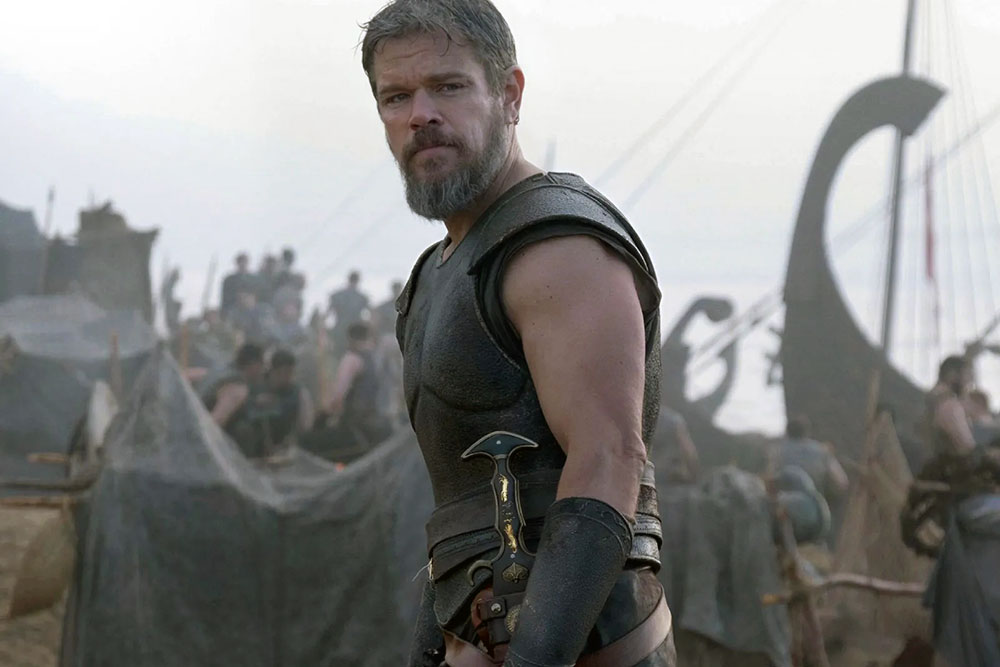
The moment casting choices were announced for Christopher Nolan’s adaptation of Homer’s The Odyssey, Earth’s first trillionaire tweeted that the filmmaker had “lost his integrity” by casting Lupita Nyong’o as Helen of Troy. Predictably, the conservative half of the internet and the manosphere chimed in, review-bombing the film as “woke trash” simply for embracing diversity and inclusion (meaning less white faces than they like to see), with trans actor Elliot Page also drawing their ire.
I’ll leave the social/political commentary right there and simply assert that Nyong’o is an absolute powerhouse of an actress and one of the most beautiful women to ever live. Casting a woman of color adds a brilliant thematic layer to the narrative, deepening the subtext of how Helen is ultimately treated by her husband, Menelaus, after the war.
I could respect the critique of the film from strict Homeric purists who refuse to tolerate any alterations made to their beloved “Iliad” and “Odyssey.” Personally, I haven’t read the epic poem since high school, so I went in without preconceptions other than knowing that adaptations are never one for one and simply hoping Christopher Nolan would knock my socks on their ass. While his filmography isn’t flawless (I’m not as in love with Tenet and The Dark Knight Rises as others), he still has earned a lifetime pass from me after Inception, Memento, The Dark Knight and The Prestige.
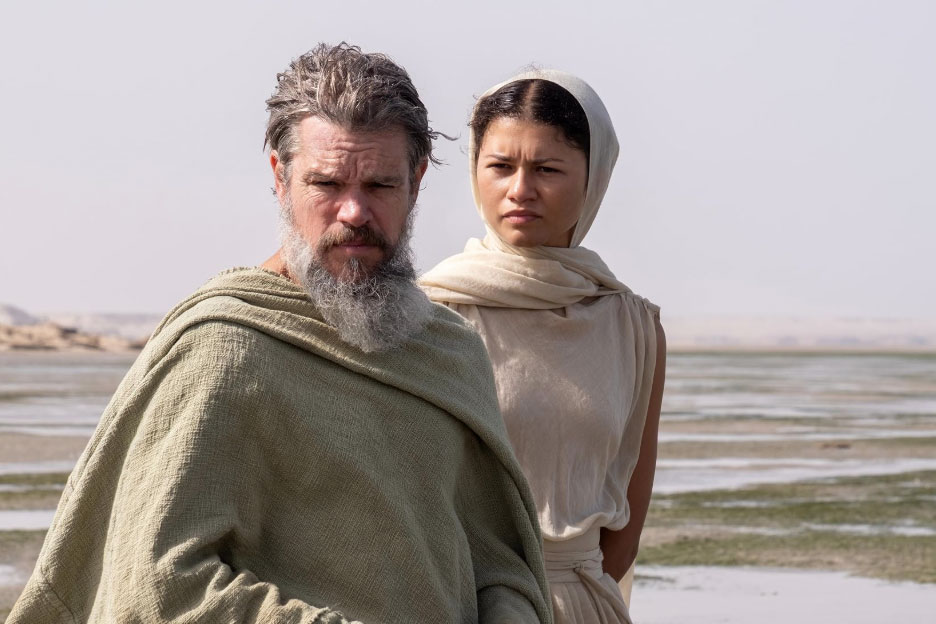
What Nolan delivers with The Odyssey is classic, old-fashioned filmmaking on a scale rarely seen since Hollywood succumbed to its over-reliance on CGI. The synergy of his muscular, technical direction, Jennifer Lame’s combustible, non-linear editing, Hoyte van Hoytema’s lyrical cinematography and Ludwig Göransson’s mercurial score results in a film that audiences will discover with awe for decades to come.
Nolan makes several bold controversial choices here, but the diverse casting isn’t the fearless one. He decides to have the cast speak in modern English with American accents, alongside intentionally anachronistic armor and ship designs. If you’re a history buff incapable of suspending your disbelief when things aren’t realistic, then this will probably be a dealbreaker. But keep in mind: this is a story featuring giants, cyclops, gods and witches. If historical accuracy is your metric for enjoyment, this isn’t the movie for you.
In typical Nolan fashion, the film features a fractured, non-linear timeline with the bulk of the story narrated by Odysseus to Calypso on the island. If you find yourself struggling with some of the stylistic choices being made, then just consider the source: Odysseus is a deeply unreliable narrator who has spent nearly a decade consuming lotus flowers. Under those conditions, anyone’s memory would be a bit hazy.
Ultimately, these surface-level aesthetics are secondary to what Nolan is actually trying to say. The film rejects the trope of timeless heroes and brave conquests. Instead, Nolan deconstructs the 3,000-year-old poem to focus on the devastating cost of warfare and the spiritual decay that plagues a man of violence.
Odysseus committed war crimes; by modernizing the narrative context, Nolan ensures that this moral darkness carries immense weight. Odysseus’ 10-year exile is reframed not as a series of exciting fantasy adventures, but as a gauntlet of psychological mirrors. The witches, sirens and monsters pale in comparison to Odysseus’ own demons, which are then externalized as the most dangerous threats he must conquer before he can return home.
Matt Damon delivers an excellent old-school movie star performance as Odysseus, balancing a shattered weariness in his eyes with an everyman vulnerability that few actors could pull off. Would Benicio del Toro, Josh Brolin, or Javier Bardem have brought a heavier intensity? Perhaps, but it would be a radically different movie. Unfortunately, most of the women in the cast are underutilized: Charlize Theron (Calypso), Zendaya (Athena) and Lupita Nyong’o (Helen of Troy) share roughly 10 minutes of collective screen time [though Samantha Morton (Circe) plays longer and Anne Hathaway’s Penelope is at the center of the drama].
The Odyssey is an epic in every possible interpretation of the word. Because the big adventure moments are shot practically and in camera on next-generation IMAX cameras, the film modulates between maximalist spectacle and devastatingly intimate human moments. Nolan proves once again that he is the ultimate mainstream auteur, crafting intellectually demanding and emotionally resonant movies that still function as spectacular mass entertainment.
If the primary purpose of cinema is transportive, The Odyssey succeeds entirely. In many ways, it serves as a spiritual sequel to Oppenheimer, asking how we return home when we have destroyed our own souls to win a war. For audiences capable of looking past the petty tribalism manufactured by social media algorithms, the film offers some profound lessons on the dangers of hubris and the futility of war. I only wonder if we are willing to learn them.
Christopher Nolan’s ‘The Odyssey’ is playing in multiple screens locally, including at True West Cinemas, 371 Healdsburg Ave.