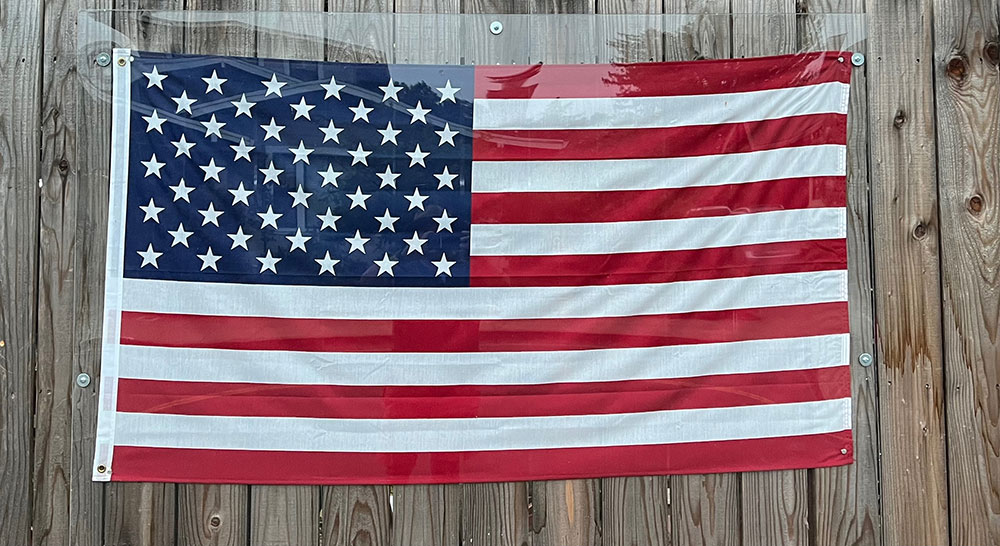
Happy birthday, America. 250 years old on July 4, 2026. There are many commemorations associated with America’s founding and important dates leading to our Declaration of Independence, including:
- Feb. 9, 1775 – Both houses of Britain’s Parliament and the King declared the Colony of Massachusetts to be in a state of rebellion;
- April 14, 1775 – British Lt. Gen. Gage received orders to suppress Massachusetts rebellion;
- April 18, 1775 – Paul Revere rode to warn of British troops marching to Concord to destroy a military supply depot;
- June 1776 – Betsy Ross presented George Washington with America’s first flag, later adopted by resolution of Congress on June 14, 1777, as the official flag;
- July 4, 1776 – The Declaration of Independence was adopted by the Continental Congress and later signed in August 1776 by most delegates;
- Oct. 18, 1781 – The defeat and surrender of British and Hessians troops at the Battle of Yorktown ended fighting;
- Sept. 3, 1783 – The Treaty of Paris was signed, formally ending the war and recognizing the United States’ independence, ratified by Congress in 1784;
- Sept. 17, 1787 – The final day of the American’s Constitutional Convention in Philadelphia where Benjamin Franklin, in response to the question, “Will it be a monarchy or a republic, Doctor?” replied, “A republic, if you can keep it.”
Facts: The first shots of the American Revolution were fired in Lexington on the town common. British troops were marching to Concord to seize and destroy a military depot capable of supplying 15,000 soldiers, including four brass canons, mortars, 11,000 musket balls, 35,000 cartridges—paper-wrapped powder, musket balls and shot ammunition—along with tons of food and supplies.
The British troops started in Cambridge, ferried across the Charles River, waded in knee-deep tidal waters and were soaking wet when they began marching towards Lexington at 2am. At Lexington, colonists stood on the town green. Orders on both sides were not to fire, but someone did.
British troops charged. Eight colonials died, 10 were wounded; one British soldier was wounded. The British vanguard, about 700, then marched to their objective, Concord, six miles away. Here colonists awaited in battle positions, though the supply depot was mostly empty. At the Battle of Concord, Americans suffered 49 killed, 41 wounded (90); British 73 killed, 174 wounded (247). And so, the military battle for independence began.
The phrase “shot heard ‘round the world’” is from Ralph Waldo Emerson’s poem, Concord Hymn, spoken during the 1837 dedication of a monument on Concord’s green. Many days walking past that obelisk while living in Concord, I reflected on the peacefulness of the place and the sacrifice that made it so.